
If you work from a spare room, a converted garage, or a corner of the living room that is truly yours alone, the home office deduction 2026 could be worth up to $1,500 the simple way — or considerably more the detailed way. It is one of the most misunderstood deductions in the tax code: millions of self-employed people qualify for it, many never claim it because they heard it triggers an audit, and some who do claim it get it wrong in ways that cost them the whole deduction. This guide explains who qualifies, the two calculation methods, and the records that turn a good deduction into a defensible one.
The rules for 2026 are settled. The simplified method still pays $5 per square foot, capped at 300 square feet. The regular method still lets you deduct your business share of actual home costs on Form 8829. And employees who work from home still get nothing at the federal level, no matter how many days a week they work remotely. What changed is only the background law: the 2025 tax law made the employee-expense disallowance permanent, so the line between self-employed and employee matters more than ever.
Who Qualifies for the Home Office Deduction in 2026
The deduction is for people who report business income on Schedule C: freelancers, independent contractors, sole proprietors, and single-member LLCs taxed as sole proprietorships. The space must pass two tests. First, regular use: you use it regularly for business, not once in a while. Second, exclusive use: you use it only for business. A spare bedroom that doubles as a guest room does not qualify. A desk in the corner of a living room where the family watches television does not qualify. A room used only as your office, even a small one, does.
The space must also be your principal place of business, or a place where you meet clients, or a separate structure used for business. For most home workers the principal-place test is the one that matters: if you do your administrative and management work from the home office and have no other fixed location for that work, it qualifies even if you also work at client sites. There are two narrow exceptions to the exclusive-use rule — storage of inventory and daycare — but for most people the rule is simple: business only, all the time.
One hard line to understand: W-2 employees cannot claim a federal home office deduction at all. The Tax Cuts and Jobs Act suspended miscellaneous itemized deductions, including unreimbursed employee business expenses, starting in 2018, and the 2025 law made that suspension permanent, as IRS Notice 2026-10 confirms. If you are an employee working from home full-time, your employer may reimburse your costs tax-free under an accountable plan, but you cannot deduct them yourself. If you are self-employed and also hold a W-2 job, only the self-employment portion of the space can qualify.
The Home Office Deduction 2026 Simplified Method
The simplified method is the one most people should start with. Measure the square footage of the dedicated office space, multiply by $5 per square foot, and stop at 300 square feet. The maximum deduction is $1,500, claimed directly on Schedule C, line 30, with no Form 8829 and no tracking of utility bills or mortgage interest. A 200-square-foot office produces a $1,000 deduction; a 120-square-foot office produces $600. The math takes a minute.
The simplified method has three limits worth knowing. First, the deduction cannot exceed your business's gross income minus your other business expenses — if the business barely broke even, the excess is lost, not carried forward. Second, you cannot deduct any actual home expenses in a simplified year: mortgage interest and real estate taxes stay on Schedule A as itemized deductions, and you claim no depreciation. Third, the choice is made each year on a timely filed return and cannot be changed for that year, although you can switch methods the following year.
The simplified method's biggest advantage is what it avoids: no depreciation, so nothing to recapture when you sell the home. Under the regular method, depreciation you claimed (or could have claimed) is taxed back when you sell, even if the rest of the gain is excluded under the $250,000 primary-residence exclusion. For a small office in a modest home, the simplified $1,500 often beats the regular method once the recapture and the record-keeping are counted honestly.

The Regular Method: Form 8829 and Actual Expenses
The regular method is for people whose actual home costs are large enough to beat $1,500 by a comfortable margin. You calculate your business-use percentage — the office square footage divided by the home's total square footage — and apply it to the year's actual expenses: mortgage interest, real estate taxes, utilities, insurance, repairs, and maintenance. Then you add depreciation on the business portion of the home. The total goes on Form 8829, which flows into Schedule C.
Take a real example. A 2,000-square-foot home with a 200-square-foot office is 10 percent business use. If the year's mortgage interest was $9,000, utilities $3,600, insurance $1,800, and repairs $1,200, the business share is $1,560 — already more than the simplified maximum — before depreciation is even counted. Depreciation can add hundreds more per year. But the price is record-keeping: every bill, every receipt, the square footage calculation, and the depreciation schedule, kept for as long as you own the home plus the years the IRS can still audit.
The regular method also has a carryover the simplified method lacks: if the deduction exceeds the business's gross income limit in a given year, the excess carries forward to the next year instead of vanishing. That matters for a business with a thin year. But it also has the recapture trap — depreciation taken under the regular method is taxed when you sell, and the business percentage of any gain attributable to depreciation cannot be excluded. Run both methods on paper before you choose, and choose the one that wins over the years you will own the home, not just this one.
Home Office Deduction 2026: Records Your Bank Statements Prove
Whichever method you choose, the deduction stands or falls on records, and your bank statements are the backbone of those records. The IRS asks for the amount, the date, the place, and the business purpose of each expense, and a converted bank statement gives you the first three automatically. Convert the year's statements from PDF to Excel, filter to the home costs — mortgage payments, utility debits, insurance premiums, repair bills — and the totals for Form 8829 practically build themselves. Our bank statement guide for income tax returns shows the workflow, and our year-end tax planning guide for 2026 covers the other deductions that pair with it.
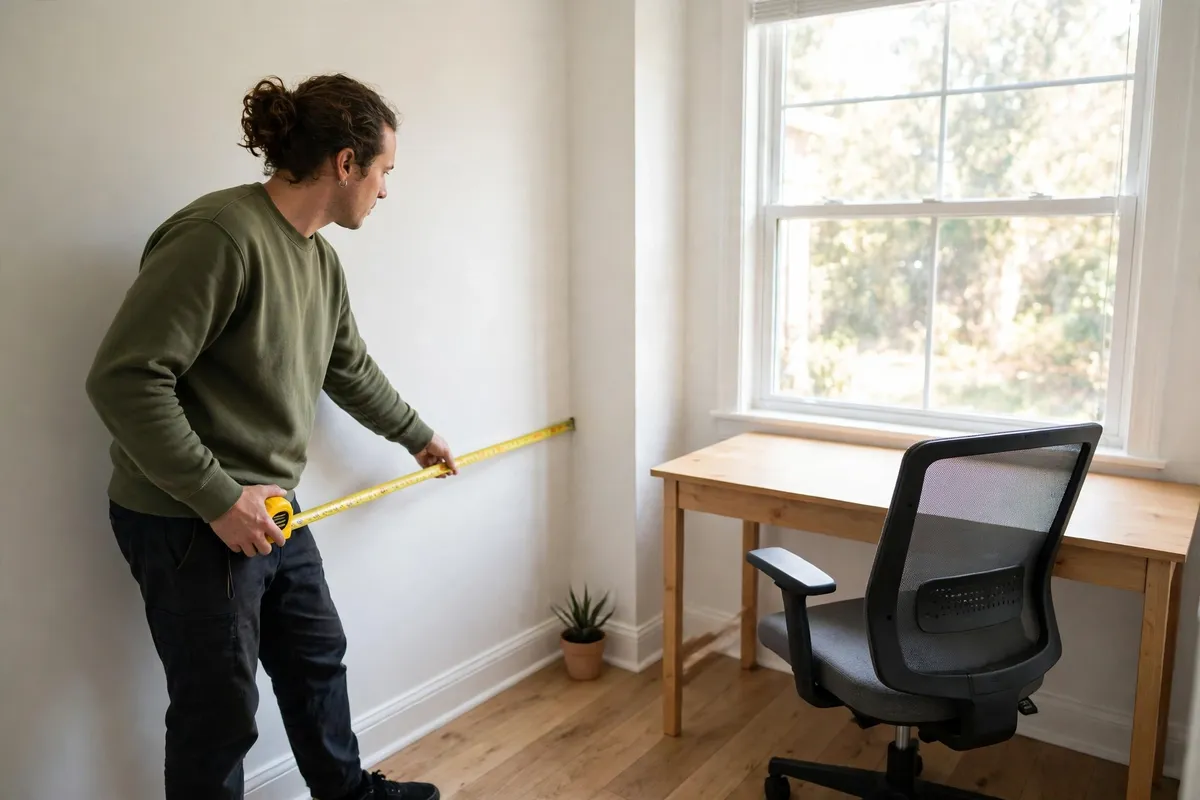
For the simplified method, the records are lighter but not optional: a photo of the office showing it is used only for business, the square footage measurement with the date it was taken, and the business income figure that caps the deduction. For the regular method, keep every bill and receipt, the square footage calculation, and a simple log of the business-use percentage if the space ever changes. Store the receipts with the statements: a photo or scan named by date and vendor, filed in a folder for the tax year. Our guide to using bank statements for budgeting shows the same categorization habit applied to the whole household, which is where the home-cost numbers usually hide.
One more number to know: the 2026 standard deduction is $16,100 for single filers and $32,200 for married couples filing jointly. That matters because mortgage interest and real estate taxes claimed on Schedule A only help if your itemized total beats the standard deduction. Many home-office claimants take the standard deduction and use the simplified method — the $1,500 is claimed on Schedule C regardless of which standard or itemized route you take, so it is not wasted either way.
Mistakes That Lose the Deduction
The most common mistake is claiming a shared space. The dining table where the family eats, the guest room with a desk in the corner, the couch where you answer emails — none of these pass the exclusive-use test, and claiming them is the fastest way to lose the deduction and invite questions about the rest of the return. If the space cannot be business-only, do not claim it. A small dedicated corner that is truly yours beats a large shared room that is not.
The second mistake is mixing methods in the same year. You choose one method per year, on a timely filed return, and you cannot switch mid-year or amend to the other method after the fact. The third is forgetting the gross-income cap: a business that lost money cannot use the deduction to make the loss bigger, and under the simplified method the unused portion is gone for good. The fourth is the employee trap — W-2 remote workers who claim the deduction anyway, because a tax software prompt or a well-meaning article told them they could. They cannot, and the correction costs penalties and interest. The fifth is poor records: a deduction with no measurement, no photo, and no statements behind it is a deduction that folds the first time anyone asks.